Best Haleem in Warangal: The Honest Ramzan-Seasonal Guide
- 4 min read
- Food
Haleem in Warangal is strictly Ramzan-seasonal — it appears with the holy month and vanishes after. Our guide names the specialists and decodes the degh.
Best In Warangal — your local guide to food, culture and the city we call home.
Haleem in Warangal is strictly Ramzan-seasonal — it appears with the holy month and vanishes after. Our guide names the specialists and decodes the degh.
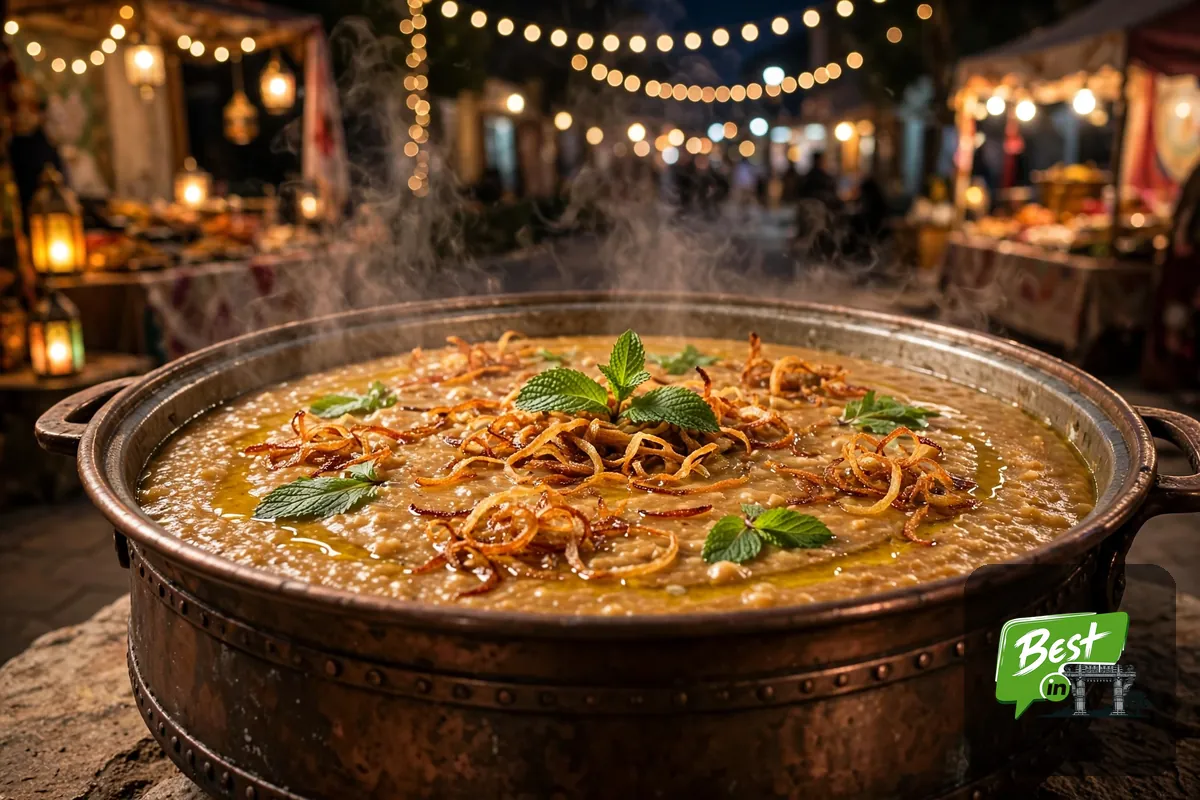
Let's be clear about the most important thing first: haleem in Warangal is Ramzan-seasonal. It appears with the holy month of Ramzan, simmers in giant deghs outside restaurants and mosques through the evenings, and largely vanishes when the month ends. Any guide that lists "year-round haleem shops" in Warangal without qualification is guessing. This one isn't.
What follows is an honest seasonal guide: where haleem reliably appears during Ramzan, what to look for in a good degh, and how to make the most of the few weeks it lasts.
King's Harees and Haleem — Nakkalagutta, Hanamkonda. Listed on Zomato's reviews pages as a harees/haleem specialist, and the name itself tells you the seasonal story: this is a Ramzan-window operation. Harees (the Arabian cousin, wheat and meat pounded smooth) and haleem (the Hyderabadi-style slow-cooked wheat-lentil-meat porridge) are the twin offerings.
Haleem House — KLN Reddy Colony, Hanamkonda. Listed on Justdial and Magicpin under haleem/Mughlai. Another name that surfaces specifically in the Ramzan conversation rather than as a year-round restaurant.
A note on Mr. Hareeswala: the site mrhareeswala.com describes itself as Warangal's first haleem/harees cloud kitchen. We could not independently verify this claim from listings or public posts, so treat it as marketing until confirmed — we've included it here only so you know the name if you encounter it.
Beyond the named specialists, Ramzan transforms parts of the city. Haleem deghs appear outside established non-veg restaurants (many biryani houses add a Ramzan haleem counter), near mosques in the old city and Hanamkonda, and at temporary evening stalls along busy roads. The pattern is consistent year to year: the degh goes on the fire in the afternoon, the first servings land around iftar, and the serious crowds arrive after evening prayers.
If you're hunting, the productive approach is old-fashioned: ask around in the last week of Shaban. Locals know which degh is worth the trip this year, because the answer changes — a great haleem-maker one Ramzan may not repeat the next.
The pound. Real haleem is pounded — wheat, lentils and meat beaten into a silky, fibrous mass. It should stretch slightly off the spoon, not sit like porridge and not run like soup.
The ghee. A good degh is unapologetic about ghee. If the haleem looks lean, it's either health-conscious (suspicious) or cutting corners (worse).
The toppings. Fried onions (birista), fresh mint and coriander, julienned ginger, a squeeze of lime, and sometimes a boiled egg or dry fruits. The toppings aren't garnish — they're structural.
The meat. You should encounter actual shreds of meat, not just meat-flavoured smoothness. Mutton is traditional; chicken versions exist and are cheaper.
The queue. During Ramzan, the best deghs sell out. A haleem counter with no line at 8 PM is telling you something.
Go after 7:30 PM, when the deghs have had the full day to develop. Order one plate first — haleem is rich, and a second plate is a commitment. Eat it hot, with all the toppings, and don't plan anything ambitious afterwards. Prices are typically modest (₹100–₹200 a plate for chicken, more for mutton), which is part of the magic: this is slow food at fast-food prices.
And pace yourself across the month. Ramzan is roughly thirty evenings; the locals' approach is a different degh every few nights, with notes compared over chai. It's the city's most delicious annual ritual, and it rewards the curious.
Haleem belongs to Ramzan in Warangal — King's Harees and Haleem in Nakkalagutta and Haleem House in KLN Reddy Colony are the verified names, and the city's temporary deghs fill in the rest. Mark the calendar, follow the queues, and don't wait: the deghs go cold for another year when the crescent moon of Shawwal is sighted.
Warangal's Ramzan specialists often serve both, and visitors mix them up. Harees is the older Arabian dish: wheat and meat pounded together into a smooth, mild, deeply savoury porridge \u2014 subtle, comforting, lightly spiced. Haleem is its Hyderabadi-descended cousin: wheat plus lentils plus meat, pounded just as long but seasoned far more aggressively, finished with ghee and loaded with toppings. Think of harees as the quiet elder and haleem as the loud celebration. During Ramzan in Warangal you will find both at the specialist counters \u2014 King's Harees and Haleem in Nakkalagutta literally puts the pair in its name. Try them side by side one evening; it is the cheapest comparative tasting the city's food calendar offers.
For roughly a month, Warangal eats on a different clock. Daytime food streets go quiet; the action shifts to post-iftar, when the deghs are at their peak and the night markets wake up. Restaurants that never serve haleem suddenly do. Sweet shops extend hours. The whole city leans into the evening, and even non-fasting locals plan their nights around it \u2014 a plate of haleem followed by chai at midnight is a Warangal Ramzan tradition that crosses every boundary. If you visit during the month, respect the rhythm: eat late, eat slow, and let the city feed you on its own schedule.