Best Pani Puri in Warangal: The Evening Cart Guide
- 4 min read
- Food
Pani puri in Warangal is an evening ritual: crisp puris, fiery pudina pani, sweet imli. Where the carts gather, flavours to try, and picking a hygienic stall.
Best In Warangal — your local guide to food, culture and the city we call home.
Pani puri in Warangal is an evening ritual: crisp puris, fiery pudina pani, sweet imli. Where the carts gather, flavours to try, and picking a hygienic stall.
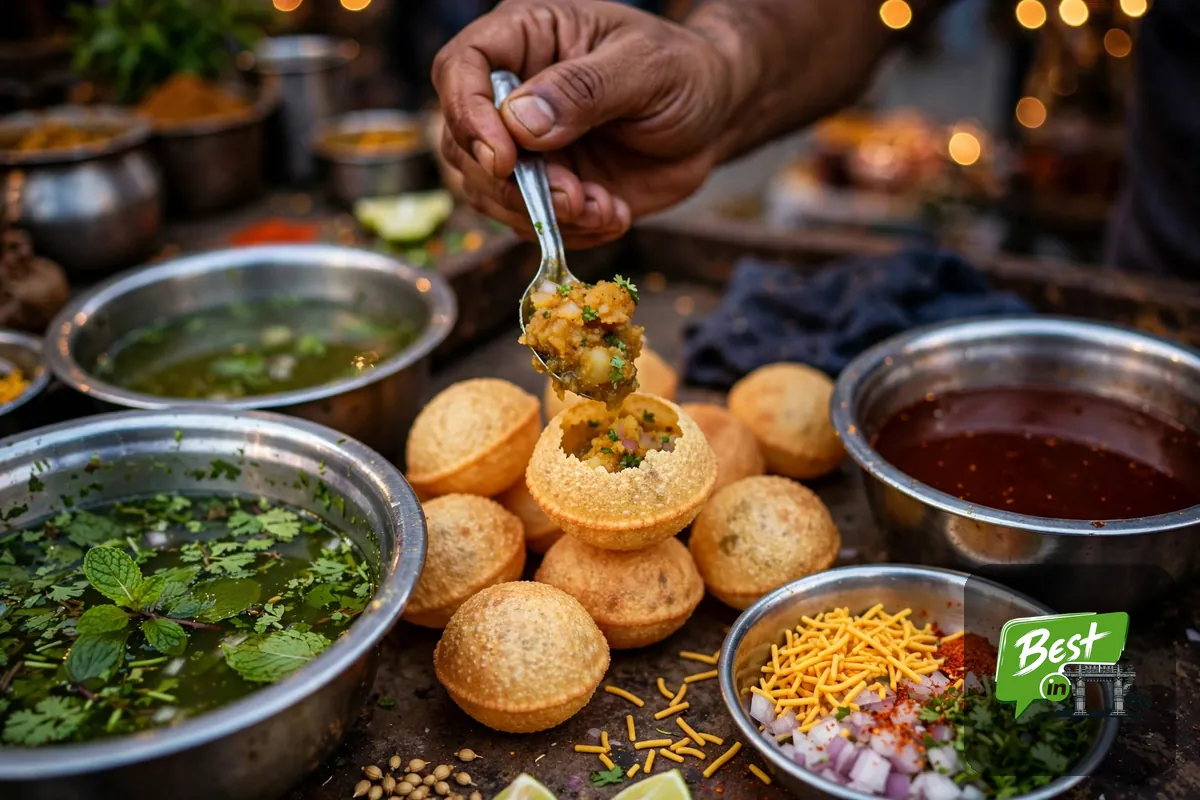
Pani puri is not a snack in Warangal. It's a competitive sport, a first-date test, and the reason half the city's evening plans start with "let's just get pani puri." The puris here are shatteringly crisp, the pani runs properly fiery, and the vendors have the assembly-line muscle memory of people who have filled a million puris. This guide tells you where the carts gather, what to ask for, and how to eat it like you belong.
Like all chaat, pani puri is an evening affair: carts set up around 4–5 PM and serve till 9–10 PM, with the 6–8 PM window being prime. You'll find the carts wherever evening crowds gather — market streets and commercial areas across Hanamkonda and Warangal, college zones (the NIT/REC Road belt, Kakatiya University surroundings), station areas, and shopping streets. The visual cue is unmistakable: a cart with steel pani containers, a pyramid of puris, and a semicircle of people eating at speed.
A Warangal pani puri vendor typically offers a pani spectrum — learn it and order with confidence:
The filling is usually spiced potato with kala chana, onion, and masala — though some vendors add moong or a ragda-style peas mix. The ritual: the vendor fills each puri to order and hands it over; you eat it immediately, in one bite, before the shell softens. Hesitation is how puris get soggy.
Pani puri hygiene matters more than with most street food because of the water. Read the cart:
The best vendors mix their pani fresh in small batches and aren't shy about it — watching the masala go in is part of the theatre.
The ideal pani puri outing is gloriously simple: one cart, two plates each, eaten standing in the 6–8 PM window, followed by a cutting chai from the nearest tea stall. For groups, make it a crawl — two or three carts, comparing pani styles. College-area carts tend toward bolder, spicier pani; market-area carts often have the most refined balance. Both are worth your evening.
Ask for 'pani puri' in Warangal and everyone knows what you mean — but the dish wears different names across India, and knowing them makes you a more interesting person at the cart. In Delhi and much of the North it's golgappa; in Kolkata and the East it's puchka, usually with a potato-and-tamarind filling and a spicier kick; in parts of Maharashtra and Gujarat it's pakodi or gupchup. Warangal's version sits in the Deccan mainstream: crisp semolina-wheat puris, pudina-teekha leaning pani, and the potato-chana standard filling. What varies cart to cart is the masala — the roasted cumin, black salt, and chilli balance that each vendor guards like a family secret. Some Warangal carts add a distinctly local touch: a pinch of the region's beloved curry-leaf or peanut podi in the mix. If a vendor offers you a taste of the pani before you order (many do, proudly), take it — it's the cart's handshake, and it tells you everything about the next ten minutes.
Carry small change — carts are cash-first. If you have a sensitive stomach, stick to the busiest carts with the freshest-looking setups (the turnover rule protects you). Monsoon evenings are peak pani puri weather. And remember the golden rule of all tri-city street food: prices and timings change — confirm before you go.
Crisp puri, cold pani, one bite. Some rituals don't need improving.