Best Pesarattu in Warangal: The Green Dosa Done Right
- 4 min read
- Food
Pesarattu — the crisp moong-dal dosa with ginger chutney — is Warangal's most underrated breakfast. Where to eat it best, including the famous MLA style.
Best In Warangal — your local guide to food, culture and the city we call home.
Pesarattu — the crisp moong-dal dosa with ginger chutney — is Warangal's most underrated breakfast. Where to eat it best, including the famous MLA style.
Ask a Hyderabadi about pesarattu and you'll get a shrug. Ask in Warangal and you'll get opinions. The green moong-dal dosa — crisp, earthy, nothing like a regular rice dosa — is one of Telangana's great breakfast dishes, and Warangal's tiffin counters treat it with the seriousness it deserves. It's protein-rich, griddle-crisp, and when it's done right, it's the best thing you can eat before 10 AM.
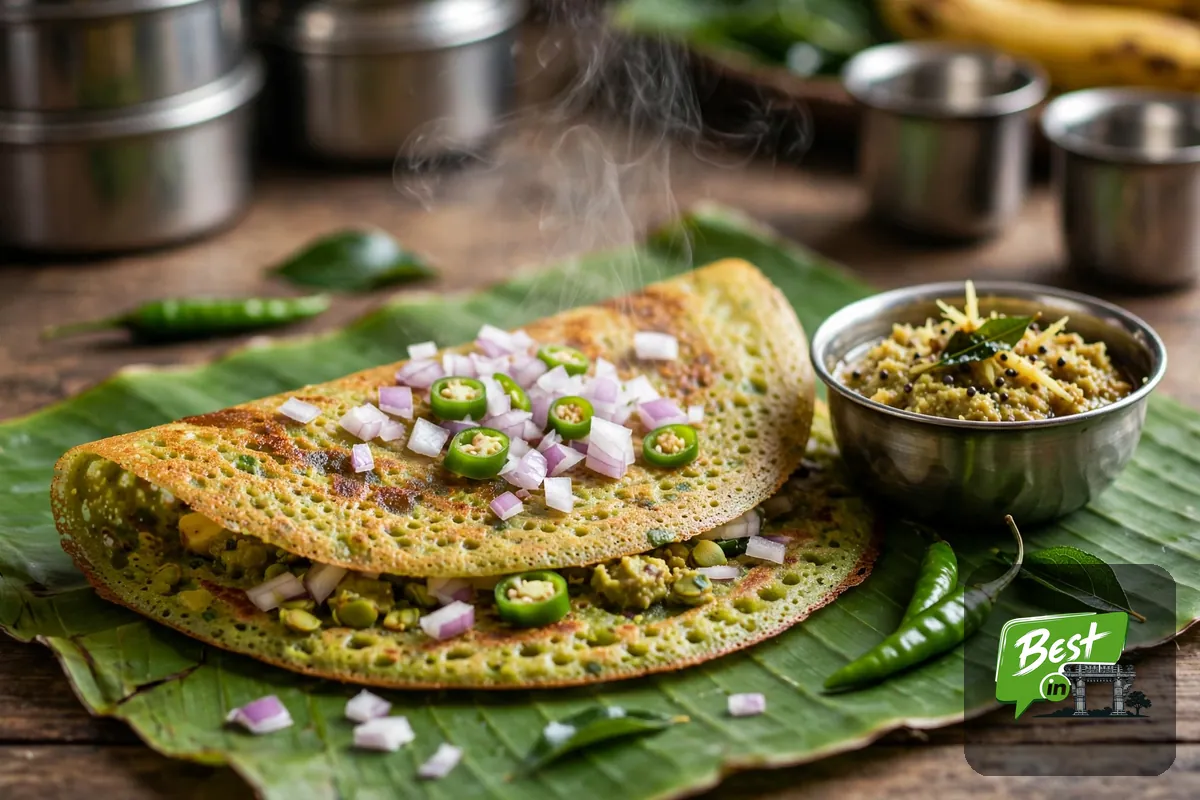
What makes pesarattu different: the batter is whole green moong (often soaked overnight) ground with green chillies, ginger and cumin — no fermentation needed, no rice. It cooks up lacy and crisp with a distinctive nutty flavour, and it's traditionally served with allam pachadi (ginger chutney), the sharp-sweet condiment that was basically invented for this dosa.
The name to know. Hotel Amaravathi — the 24-hour tiffin institution on Tailor Street — is famous for its MLA pesarattu, the hearty Andhra-canteen style: a thick pesarattu topped with chopped onions, green chillies and sometimes a ladle of upma spread across it. The "MLA" style comes from the Andhra legislative canteen tradition, where the pesarattu had to be a full meal for a busy politician. At Amaravathi it arrives the size of a hubcap, crisp at the edges, loaded in the middle. This is the reference pesarattu of the twin cities.
Order: MLA pesarattu with allam pachadi and a filter coffee. Arrive hungry.
Madhuram Tiffins and Meals lists chitti pesarattu on its tiffin menu — the smaller, delicate version of the dish ("chitti" suggesting the petite format). Where the MLA style is a feast, the chitti pesarattu is precision: thinner, crisper, quicker off the griddle. Madhuram's high-turnover morning counter is exactly the right environment for it — pesarattu waits for no one, and a busy griddle means yours comes off seconds after ordering.
Order: chitti pesarattu; add an idli-vada if the table is sharing.
Pesarattu lives on the griddles of Warangal's full-menu tiffin centres rather than in dedicated shops — any busy morning counter with a serious breakfast menu (the Hunter Road tiffin cafes, the Excise Colony and Tailor Street institutions) will have it on the board. The rule is simple: if a tiffin centre's dosa is good, its pesarattu is usually good too, because both come down to griddle control and fresh batter.
Nutritionally, pesarattu is the smartest thing on the tiffin menu. Whole green moong means protein and fibre that a rice-based dosa can't match; there's no fermentation wait, so the batter is ground fresh; and the traditional pairing — ginger chutney — is digestive by design, not accident. The upma-stuffed version is a complete meal: protein, carbs, vegetables, in one crisp package.
Culturally, it's Telangana asserting itself. While the rice dosa belongs to the broader South Indian canon, the moong-dal pesarattu is a Telugu-country signature — and Warangal, sitting at the heart of Telangana, treats it as a point of identity. The MLA style, born in Andhra's legislative canteen, adds the political footnote: this was the breakfast of people running a state.
So when you order pesarattu in Warangal, you're not ordering the alternative to dosa. You're ordering the dish the region chose for itself — crisp, green, protein-packed, and sharpened with ginger. The dosa can wait. This is the main event.
One last note: pesarattu is also the rare tiffin that reheats badly and parcels worse — which is why the counters never bother. It's a dine-in-at-the-griddle dish, and that constraint is its charm. Go to the counter, watch it crisp, eat it hot.
Pesarattu doesn't have the fame of biryani or the ubiquity of idli, which is exactly why Warangal's version is worth seeking out. It's the breakfast the locals eat while the tourists are still looking for dosa — crisp, green, ginger-sharp, and gone by 10:30.
Prices, offers and timings change — confirm before you go.