Warangal vs Hyderabad Biryani: What's Actually Different
- 4 min read
- Food
Reel comments never stop fighting about it. We settle the Warangal vs Hyderabad biryani debate: kacchi dum vs fry-piece, gongura, bagara, heat and price.
Best In Warangal — your local guide to food, culture and the city we call home.
Reel comments never stop fighting about it. We settle the Warangal vs Hyderabad biryani debate: kacchi dum vs fry-piece, gongura, bagara, heat and price.
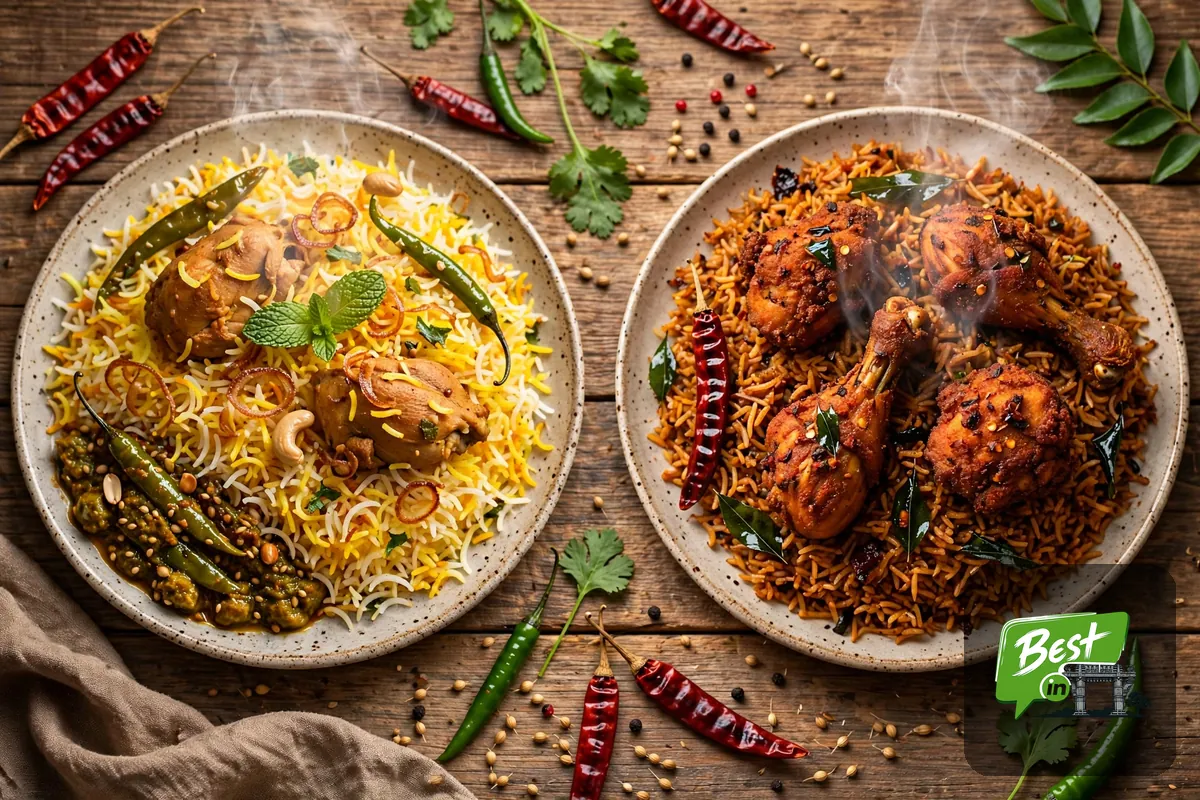
Scroll any Warangal food reel's comments and you'll find it: the debate. "This is bagara, not biryani." "Hyderabad does it better." "You've clearly never had the real thing." Biryani might be the most argued-about dish in Telangana, and the Warangal-vs-Hyderabad fault line runs right through it. So let's settle it properly — or at least explain what everyone is actually arguing about.
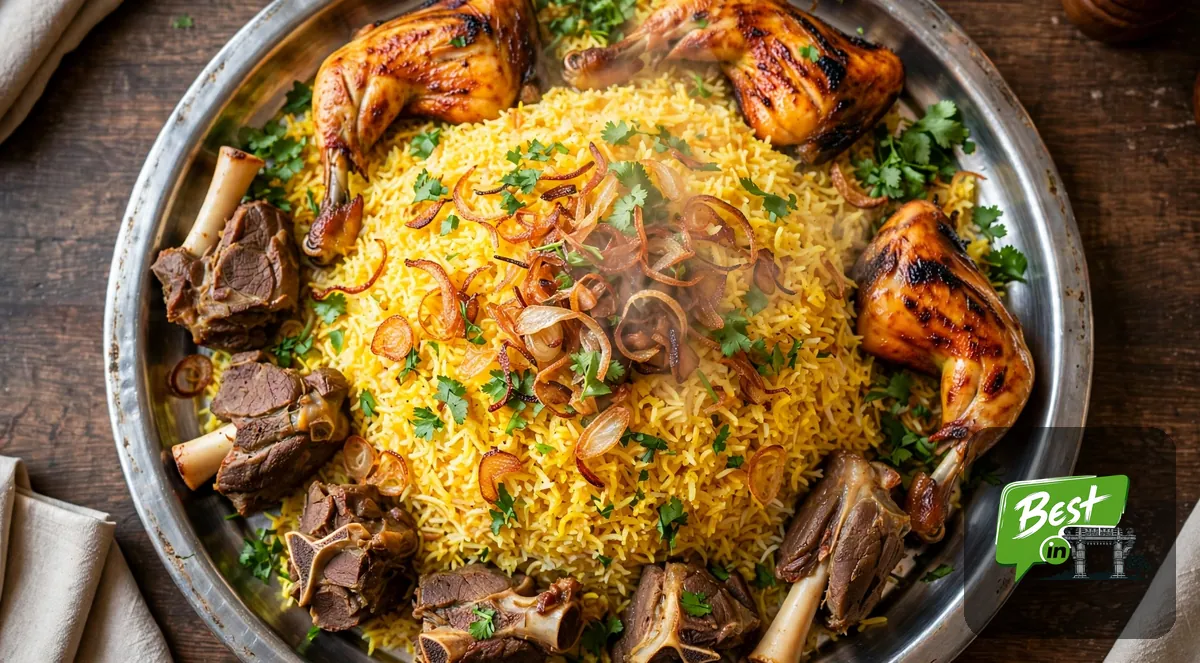
Hyderabadi biryani, the famous one, is a kacchi (raw) dum biryani: raw marinated meat layered with partially cooked basmati rice, sealed, and slow-steamed on dum until the meat cooks in the rice's steam. The marinade is yoghurt-based, fragrant rather than fiery — saffron, mint, fried onions doing the heavy lifting. It's served with mirchi ka salan (a tangy chilli-and-peanut curry) and raita, and the whole plate is an exercise in aroma and layering. This is the biryani the world knows, the Nizam's legacy, the benchmark.
Warangal's biryani comes from a different kitchen tradition — Telangana home cooking rather than royal kitchens. The differences are real:
The heat is higher. Telangana palates run spicier than Hyderabadi ones, and Warangal biryani doesn't apologise for it. The masala is more forward, the chilli more present.
The fry-piece culture. One of Warangal's signature formats is the fry-piece biryani — chicken pieces fried separately till crisp-edged, then served over or alongside the rice (Nature 369 Biryani House's chicken fry-piece biryani combo, documented around ₹200, is the verified archetype). Hyderabad's kacchi method would never do this; Warangal does it proudly.
Gongura makes an appearance. Sour, iron-rich gongura (sorrel leaves) is a Telangana staple, and Warangal kitchens put it in biryani — Raju Gari Biryani Adda's gongura chicken biryani (documented around ₹150) is the verified example. You will not find this in Hyderabad's old city.
The rice is often less precious. Where Hyderabad insists on long-grain basmati, Warangal's budget biryani — the ₹89\u2013₹150 segment that goes viral locally — often uses shorter-grain or everyday rice. The flavour compensates; the aroma doesn't pretend otherwise.
The fiercest reel-comment fights are about bagara rice — plain rice tempered with whole spices, served with a separate curry — being passed off as biryani. The purists have a point: bagara is not dum biryani, and calling it biryani is a stretch. But the street reality is blurrier: Warangal's budget biryani scene (the unlimited ₹89\u2013₹100 promos at spots like Sohail Hotel and Red Bucket Biryani, documented in 2025 reels) sometimes lands closer to flavoured rice with chicken than to true dum. Know what you're buying: at under ₹150, you're paying for quantity and spice, not for the dum ritual. That's a fair trade — just don't confuse it with the other thing.
Complicating the debate, Warangal also sits near the Andhra influence zone. Andhra-style biryani (think the Vijayawada/Guntur school) leans even hotter, often with a distinctive green-chilli sharpness and a looser, more "pulao-adjacent" construction. Warangal's biryani borrows from both neighbours: Telangana's earthiness, Andhra's fire, Hyderabad's dum technique in the better kitchens. It's a border cuisine, and like all border cuisines, it's more interesting than the capitals'.
Hyderabad: mirchi ka salan and raita, always — the salan's tang is engineered to cut the biryani's richness. Warangal: more variable. The budget joints serve a basic raita or a thin salan; the better kitchens do a proper mirchi ka salan; the fry-piece plates often come with nothing but extra masala and a wedge of onion. The accompaniment gap is actually the easiest way to judge a Warangal biryani kitchen: if the salan is taken seriously, the biryani usually is too.
Here's where Warangal genuinely diverges. Hyderabad's biryani economy has a premium tier (the old-city legends, the ₹300+ plates). Warangal's is a volume economy: unlimited deals, bucket biryanis, family packs, the ₹89 phenomenon. The Swiggy food report put Warangal at 4.46 lakh chicken biryani plates in 2025 — roughly 1,222 a day — and that number is built on affordability, not luxury. Warangal doesn't do biryani as an occasion; it does biryani as a habit.
Hyderabad biryani is the refined classic: aromatic, layered, technically precise. Warangal biryani is the bolder cousin: spicier, more varied, shaped by fry-piece culture, gongura experiments and a volume-driven price war. Neither is "better" — they're answers to different questions. Order Hyderabadi when you want the dum ritual; order Warangal when you want heat, quantity and local character. And when the comments start fighting about bagara, you'll now know exactly what everyone means.
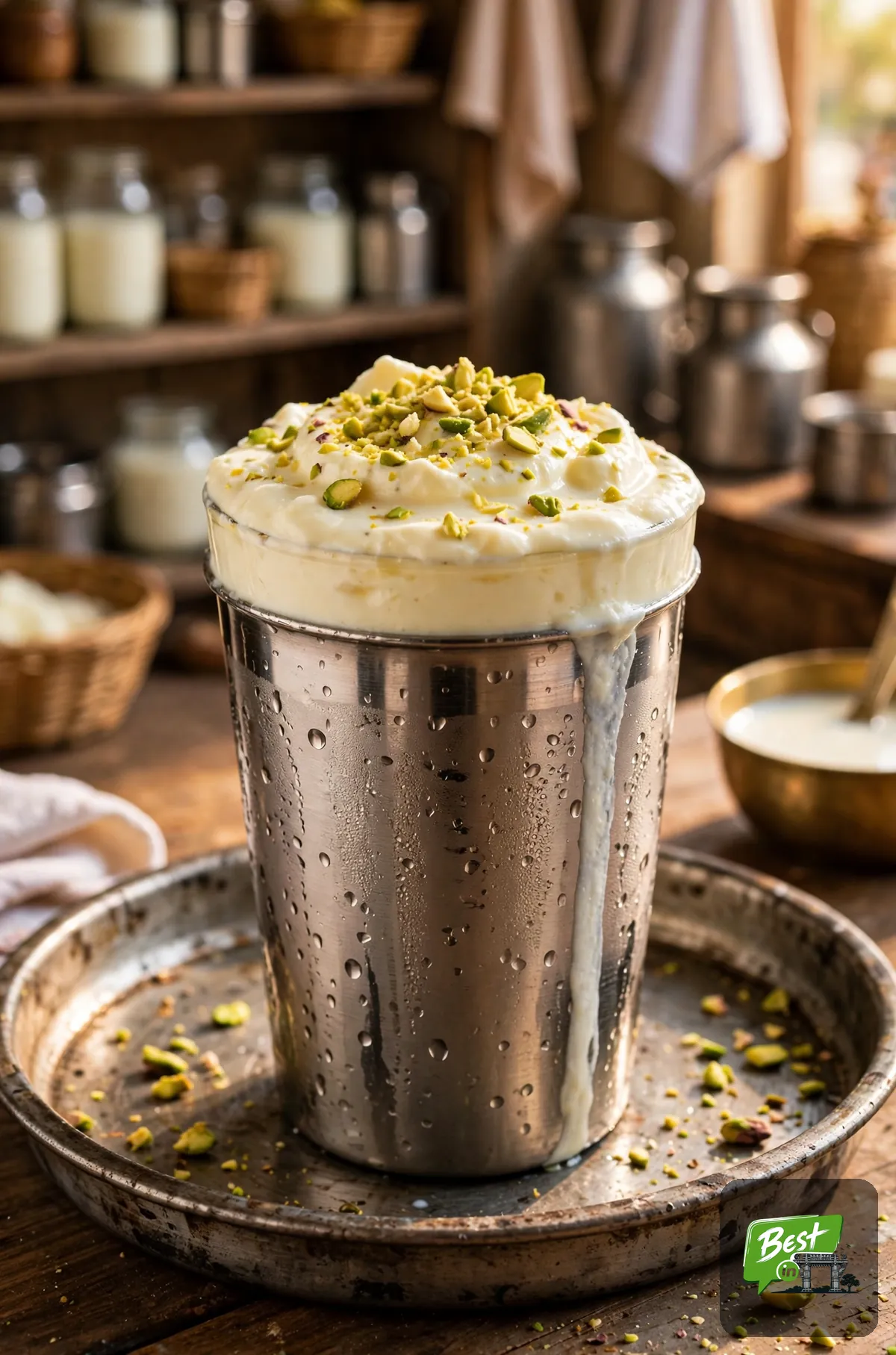
The accompaniments deserve their own footnote, because they change the meal. Hyderabadi dum biryani wants mirchi ka salan — the tang is engineered for the occasion — and a sweet lassi after is the old-city move. Warangal fry-piece biryani, hotter and drier, pairs better with a simple raita and something cold and fizzy; the student-belt order is almost always a cooldrink alongside. Small details, but they tell you which tradition you are eating in.